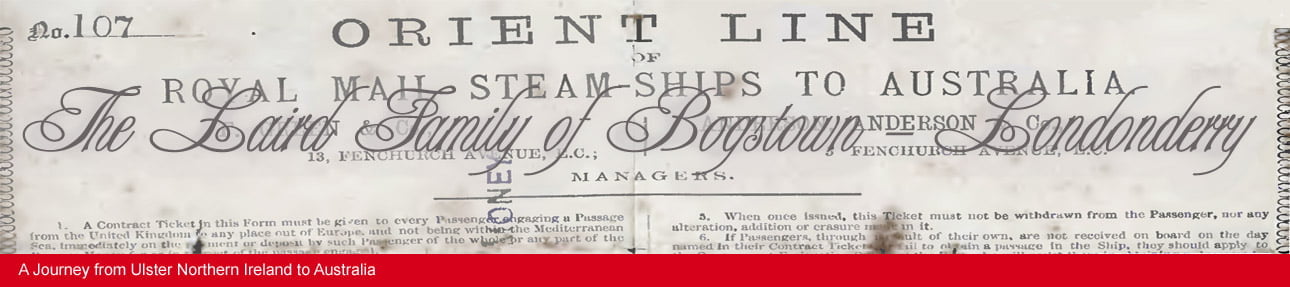
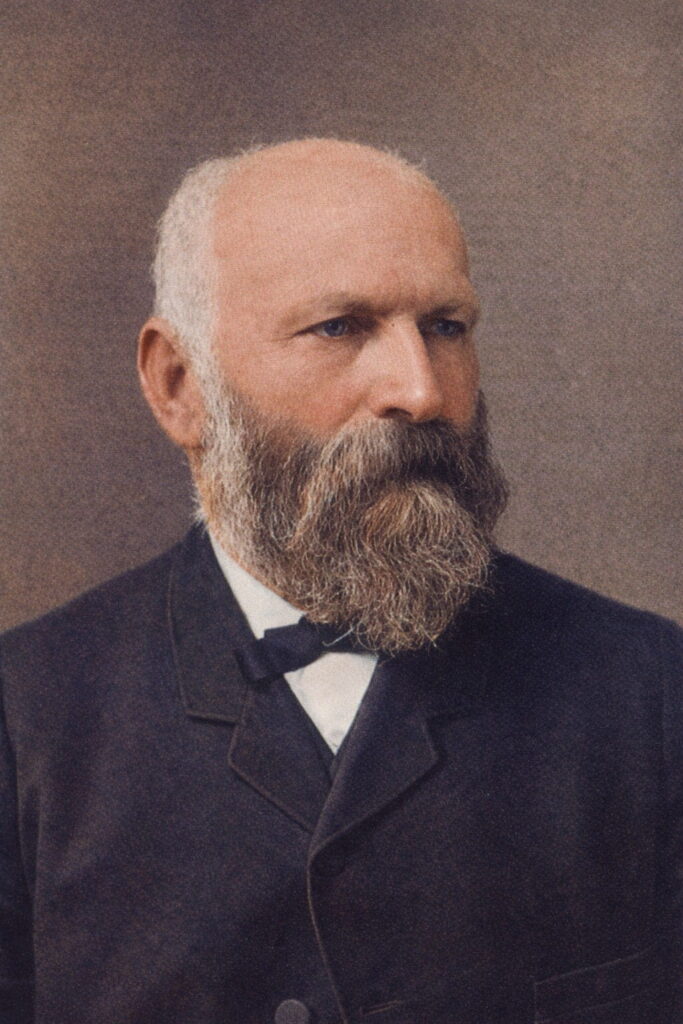
In 1860 Mr. William Hunter immigrated from Letterkenny to the Bendigo Gold Fields, he became a prominent Bendigo mining investor with interests in numerous mining companies and shares in many others across the district. Alongside managing these extensive ventures, he was deeply involved in charitable work, serving as a life governor of the Hospital Committee and the Art Gallery, and supporting many worthy causes.
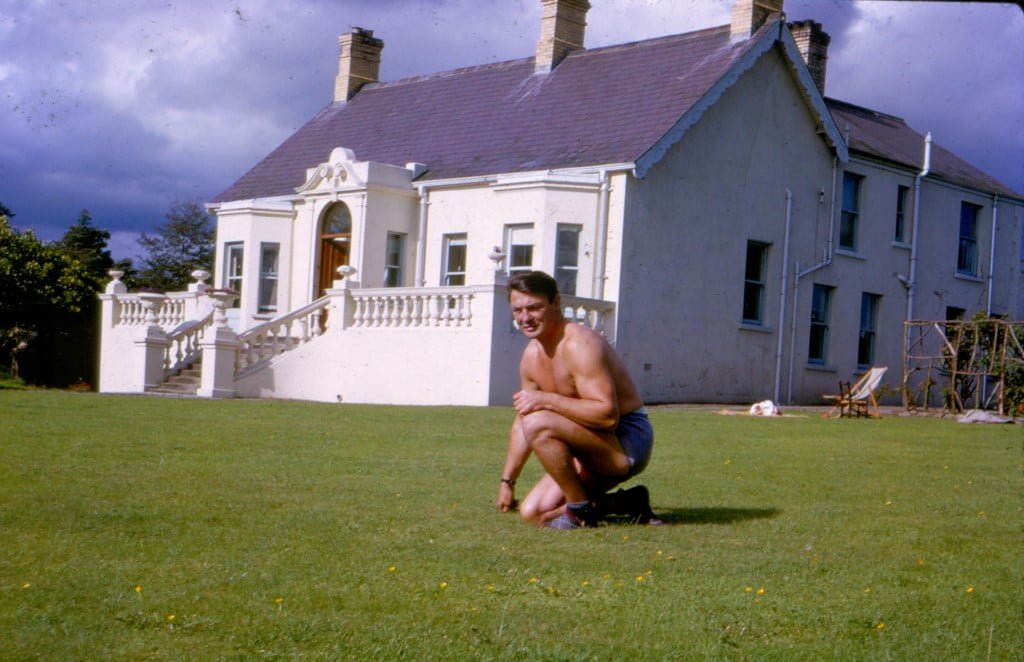
He lived at “Hunter House,” a large, well-appointed 25-room residence in Queen Street, regarded as one of the finest homes in Bendigo. Of Northern Ireland origin, Hunter was respected as a careful, enterprising businessman known for integrity, honesty, and reliability, qualities shared by his brothers and held up as exemplary for the colony.
FAR-REACHING has been the effects of the Australian gold-fields. They have given employment to many thousands of men, and rescued them from the grim horrors of Want. By their aid thousands have risen to an independency and are placed in a position where they can help others in Life’s battle. By their aid a fuller, richer intelligence has been given to thousands. They have contributed, in short, to a general leavening of society, and made the poor man rich and enabled him to devote his talents to the cause of a young, struggling country, and his sons have been given an education and training equal to the aristocrats.
The effect has been felt not only in the colonies, but throughout the civilised world. We quoted in- stances in our history of the beneficent influences of Australia on the sons of the Old World, the influences. which help towards the Progress of Society. Statistics were recently issued, showing how Australia still heads all other countries in her yearly output of gold. And yet only forty-five years ago gold was not known to exist here!
The next forty-five years will, there is every likelihood to believe, prove the existence of gold in places not yet prospected. Some experts state that in Australia there are several belts of gold- bearing country rising out of the ocean in the south and running right over the continent into the ocean in the north. Two of these are proved to run through Victoria, one or more through South Australia, and one or more through West Australia.
Along the whole of those belts have been found indications of gold, and the future will probably discover favoured localities where much wealth is hidden, and where is the nucleus of many thriving cities. Australia but awaits a great increase of population when some will be forced into now almost unknown parts, and there will find that which will keep them and their children’s children to many generations. By such means new gold-fields will be discovered, and the future influence of Australia on the world may be more marked than the past.
In Bendigo and Ballarat we have cited many cases where gold has had a beneficent influence. These two prosperous cities -possessing together a population approximating to a hundred thousand souls-were sheepwalks forty-five years ago.
Settlers had congregated round them, and as the gold lay on the surface-almost staring at the pioneers in fact-it was soon discovered. And then two cities were born into the world and gradually and surely they grew in stature, and Nature supplied such fruits as attracted thousands and thousands to the districts.
After garnering and filling their storehouses the enriched men either established homes in the colonies or returned to their native lands and there gave their countrymen some benefit of their great wealth. To come down to a point we need only mention the experience of the Hunter family in Bendigo. After working energetically in this district for some years and helping in the general followed him here in 1857. Again, the success of the two inspired Mr. William Hunter, the subject of this sketch, to join them in 1860.
And lastly, in 1868, Mr. Robert Hunter left Ireland to apply his strength and energy in Bendigo, Each member of the family proved high valuable citizens, and became closely identified with the welfare of the district. When Mr. William Hunter, who was born on a Letterkenny farm in 1840, arrived in Bendigo in 1860, his brother, Mr. John, was digging for gold at Kangaroo Flat, and the pioneer, Mr. Joseph, was following the same occupation at Golden Gully. Mr. William joined forces with the latter, and for six weeks they worked together there. Then they came further down the valley into Bendigo proper, where Mr. Joseph Hunter possessed a fairly large puddling machine.
The two still worked together, and they kept several horses and carts going to supply the puddling machine which was situated near where the Savings Bank now stands in Hargreaves Street. Some time later, Mr. William Hunter went to Eaglehawk in connection with a claim in that part of the field. When he first reached Bendigo he knew nothing of mining, but his brother, who had served an excellent apprenticeship, quickly gave him the necessary practical lessons. While at Eaglehawk the young fellow was able to work on equal terms with those around him, and he remained there for some time obtaining fairly good returns. Eventually brighter days were dawning, and though two of the brothers still hold the property, and have it stocked with cattle, their home is not there.
The Garden Gully United mine laid the foundation of the fortunes of the Hunter family. Mr. Joseph Hunter was one of the originators of the company, and soon after coming to the colony Mr. William purchased shares in the mine for a small price. His brothers did likewise. During following years they regretted the investment, for three penny calls were made too frequently to please them. After paying the calls they were disappointed to observe but little indication of a happy outcome of the investment. But they were men of faith, and though the shares went a-begging the family held most of theirs, Mr. George Lansell even, in order to get rid of 5000 shares, paid the late Mr. Joseph Hunter £2 10s. to take over the liability on them. Soon the sorrow of the family was turned into gladness.
With regard to the Garden Gully United shares, it may almost be said that the shareholders sowed in tears and reaped in joy. After the mine was thoroughly prospected, as described else- where, it was found immensely rich in gold-so rich as to place the shareholders in affluent circumstances. The Hunter family benefited more than most others, for they held large interests in the mine. Substantially, the Garden Gully United has paid a million pounds in dividends. All the local members of the family were now rich, and their enterprise had been handsomely rewarded.
They had, however, separated. Mr. Joseph Hunter was constant in his faith in the resources of the Garden Gully. He believed when the reef was properly prospected that it would be found to be rich, and he was right. But, unhappily, he was not destined to witness its glory. That shrewd, far-seeing man, who was esteemed by a wide circle of friends, died in May, 1871, at the early age of thirty-five years. His wife preceded Australian home, and these two brothers alone remain in the colony to represent the pioneer family. Mr. Robert Hunter married a daughter of Mr. George Craib, J.P., of Melbourne.
They have four children. When Mr. William Hunter took up his residence in Bendigo in 1883, he entered upon an extensive connection with the great Bendigo mining industry. He previously held shares in quite a number of mines, and he now invested right and left. He did not confine his attention to one reef, but placed his capital where it would assist mines scattered all over the field. Such an action as this cannot be too much praised, for it is only by general and liberal assistance to the great industry that prospecting and development can be carried on.
Many of the men who made fortunes in Bendigo have gone to Melbourne and elsewhere and spent it, or continue to reside in this city and keep their capital safely locked in the banks. Not so Mr. Hunter, for he has invested his wealth in the district, so that all obtain some good. He has become actively associated with the directorate of many companies, and next to Mr. George Lansell is perhaps the principal director of mines in the district.
The following long list will speak for itself:- The Garden Gully United, Carlisle, Cornish United, Sea, Ulster, Eureka, New Chum Railway, Shenan- doab, North Shenandoah, Shamrock, Young Chum, Craven’s, Garibaldi, New Chum Consolidated, New Chum United, Pearl, Gol- den Star, Great Britain, and Hustler’s No. 2 companies. In addition, he is a shareholder in a large number of other companies in the Bendigo district.
While watching over his extensive mining interests, he has found time to devote to the cause of charity. He is a member and a life governor of the Hospital Committee, life governor of the Art Gallery, and a contributor to every deserving cause. His palatial residence-“Hunter House -is in Queen Street. It consists of twenty-five rooms handsomely furnished, and is surrounded by well-laid-out grounds. Mr. Hunter’s home is one of the finest in the Bendigo district, Mr. William Hunter is a splendid stamp of our North of Ireland fellow colonists. Enterprising, but careful and plodding, he weighs an investment well before he ventures.
He bears an excellent reputation for strict integrity and honest dealing, and his word when once given is as sacred as his bond. The same may be said of all his brothers, and it were well if the colony were full of such enterprising citizens.